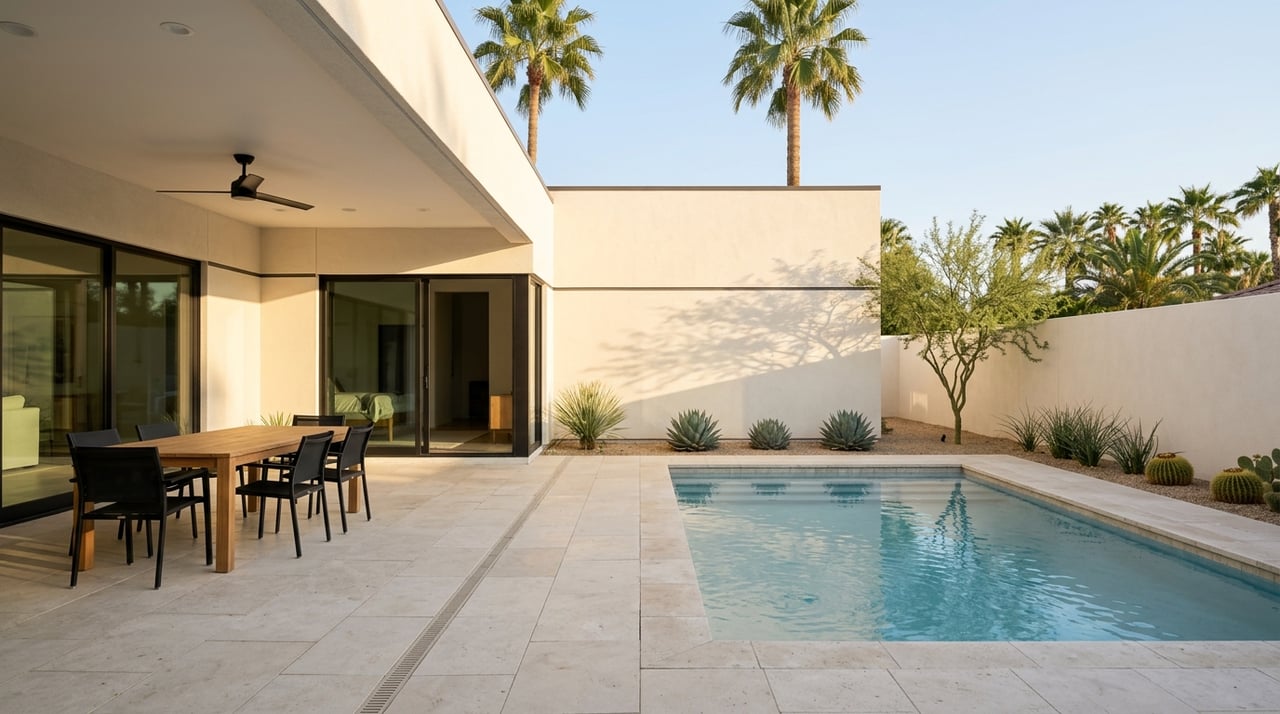
Thinking about moving to Arcadia? If you want a Phoenix neighborhood that feels established, connected, and easier to navigate day to day than a far-out suburb, Arcadia deserves a close look. From school planning to commute patterns to what ordinary errands actually feel like, here’s what you should know before you make a move. Let’s dive in.
Why Arcadia Stands Out
Arcadia is an east-central Phoenix neighborhood, not a separate city. It is known for historic charm, leafy streets, citrus-grove heritage, and a mix of classic and updated ranch-style homes.
Its location is a big part of its appeal. Arcadia sits between Camelback Mountain and the Salt River, and it functions as a close-in neighborhood with easier access to central Phoenix job centers and everyday amenities than many outer-loop suburban options.
For many relocating buyers, that means you are not choosing between convenience and character. In Arcadia, you often get both.
Arcadia Schools: What Relocating Buyers Should Know
If schools are part of your home search, the most important thing to know is this: school assignment is address-specific. In Scottsdale Unified School District, regular enrollment is based on your home address, and open enrollment may also be available depending on the situation.
That means the right way to evaluate a home is to confirm school assignment before you write an offer. A listing’s general location in Arcadia does not automatically tell you the exact school path.
Schools in the Arcadia Learning Community
Scottsdale Unified School District’s Arcadia Learning Community includes:
- Arcadia High School
- Ingleside Middle School
- Hopi Elementary School
- Tavan Elementary School
- Echo Canyon K-8
Arcadia High School is a public four-year high school in Phoenix. It offers Honors, Dual Enrollment, AP coursework, EVIT vocational programs, and special education services.
Echo Canyon K-8 is a school of choice with no geographic boundaries. That makes it a different type of option from neighborhood assignment schools.
A Closer Look at Elementary Options
Hopi Elementary and Tavan Elementary both describe a strong focus on personalized or differentiated learning and family engagement. Hopi highlights a supportive community and weekly parent volunteering.
Tavan describes itself as a neighborhood school near the base of Camelback Mountain and notes outdoor-oriented campus features. If your daily routine includes drop-off, after-school activities, and quick access home, those details can matter more than you might expect.
School Planning Tips Before You Buy
When you relocate, school logistics can shape your entire day. Before buying in Arcadia, it helps to:
- Verify school assignment by property address
- Review open enrollment options if needed
- Compare commute routes from home to school and work
- Consider how drop-off and pickup fit your daily schedule
This is where local guidance can make a difference. In a neighborhood like Arcadia, small location differences can change both school assignment and your daily drive.
Arcadia Commute: Central and Practical
Arcadia’s central location is one of its strongest advantages. The neighborhood generally sits between 36th and 68th streets and between Camelback and Thomas roads, so many daily trips start on the local street grid before connecting to larger routes.
That pattern tends to feel different from a long suburban freeway commute. You are starting from a more central position within the metro, which can make work, school, dining, and airport trips feel more direct.
Nearby Employment Centers
Arcadia is well positioned for access to several major employment areas, including:
- Camelback Corridor
- Downtown Phoenix
- Sky Harbor Airport
- North Central Avenue
Downtown Phoenix serves as both a government and employment center, and it is also a transportation hub. Sky Harbor is another major draw, employing more than 47,000 people.
Scottsdale Airpark is also relevant for many Arcadia buyers. The City of Scottsdale describes it as a major economic asset with more than 85 major companies and nearly 59,000 employees.
Commute Routes and Connectivity
For drivers, SR 51 is an important north-south route in the area. ADOT says it was built to relieve congestion and runs from the I-10/Loop 202 Mini-Stack to Loop 101.
Loop 202 South Mountain Freeway adds 22 miles of east-west freeway capacity across the metro. Depending on where you work, this broader regional access can help with cross-valley travel.
Why Arcadia Appeals to Professionals
Arcadia often works well for people who want to live nearer to inner-metro job centers rather than take a longer suburb-to-city drive. That includes professionals connected to Downtown Phoenix, the airport area, central business corridors, and medical or academic hubs.
ASU’s Downtown Phoenix campus adds another major center tied to health care, law, government, public service, arts and sciences, journalism, media, the corporate sector, and global business management. The campus is also within walking distance of several major medical employers, including Phoenix Children’s Hospital, Banner University Medical Center Phoenix, and St. Joseph’s Hospital and Medical Center.
Daily Life in Arcadia
One reason Arcadia is popular with relocating buyers is that everyday life can feel easier here. You are in a central Phoenix neighborhood, but many of the things you need during the week are close at hand.
That includes dining, casual meetups, shopping, outdoor time, and basic errands. For many buyers, that blend of convenience and neighborhood feel is a big part of the draw.
Everyday Errands and Dining
Arcadia has a dense mix of local restaurants, neighborhood shopping, and small retail along the Camelback, Indian School, 40th Street, and 44th Street corridors. This helps the area feel self-contained, even though it is centrally located.
For larger shopping trips, Biltmore Fashion Park at 24th Street and Camelback offers more than 75 retailers in an open-air setting. Scottsdale Fashion Square is another major option for shopping, dining, and entertainment.
If your goal is to avoid spending half your weekend driving from one errand to the next, Arcadia’s location can be a real quality-of-life advantage.
Parks, Trails, and Outdoor Access
Arcadia also offers strong access to outdoor spaces. Arcadia Park includes a playground, picnic area, shade structures, restrooms, and a volleyball court, and it is open from 5:30 a.m. to 10 p.m.
The canal-trail network from SRP adds more than 80 miles of free paved paths with lighting, landscaping, and public art. In and around Arcadia, the canal path is a local favorite for biking, jogging, and casual walks.
Camelback Mountain is nearby and widely known as a top hiking destination. Still, it is important to plan carefully because the main trails are rated extremely difficult, parking is limited, and dogs are prohibited.
What the Phoenix Heat Means for Daily Routines
Climate is one of the biggest practical adjustments for anyone relocating to Arcadia. According to NOAA’s 1991 to 2020 normals for Phoenix Sky Harbor, average daily highs reach 104.2 degrees in June, 106.5 degrees in July, and 105.1 degrees in August.
Phoenix also gets just 7.22 inches of annual precipitation, with virtually no snowfall. So while outdoor living is part of the lifestyle, your schedule usually needs to adapt to the season.
How Residents Typically Adjust
The City of Phoenix advises moving outdoor activity during heat waves to cooler parts of the day, especially early mornings and late evenings. In 2024, the city’s Trail Heat Safety Program recorded 121 days at 105 degrees or higher and 45 trail-closure days.
In practical terms, many routines shift around the weather. You may find yourself planning early workouts, indoor midday errands, and more evening time outside once temperatures start to drop.
That does not mean Arcadia is less livable in summer. It means your day-to-day rhythm may look different than it would in a cooler climate.
Is Arcadia a Good Fit for Your Move?
Arcadia is best suited to buyers who want a close-in Phoenix neighborhood with mature streets, strong access to schools, nearby trails, central shopping, and more direct routes to major employment centers. It offers a different lifestyle than a newer edge-of-metro subdivision.
If you value convenience, neighborhood character, and the ability to stay connected to central Phoenix and Scottsdale corridors, Arcadia is worth serious consideration. And if you are relocating from out of state, having a clear plan for school verification, commute mapping, and daily routines can make your move much smoother.
When you are ready to compare blocks, school options, and the feel of different parts of Arcadia, Mike Brooks can help you navigate the neighborhood with local insight and a hands-on approach.
FAQs
What should you know about school boundaries in Arcadia Phoenix?
- In Arcadia, school assignment is based on the property address in Scottsdale Unified School District, so you should verify the exact school boundary before making an offer.
What schools are part of the Arcadia Learning Community?
- Scottsdale Unified School District’s Arcadia Learning Community includes Arcadia High School, Ingleside Middle School, Hopi Elementary School, Tavan Elementary School, and Echo Canyon K-8.
What is daily commuting like from Arcadia Phoenix?
- Arcadia offers a central location with access to local street grids and major routes, making it practical for commuting to Downtown Phoenix, Camelback Corridor, Sky Harbor, North Central Avenue, and other inner-metro job centers.
What is everyday life like in Arcadia Phoenix?
- Daily life in Arcadia often includes nearby dining, local shopping, easy errand runs, canal-path access, parks, and close proximity to larger retail areas like Biltmore and Scottsdale shopping districts.
How does summer weather affect life in Arcadia Phoenix?
- Phoenix summer heat often shifts routines toward early mornings, indoor midday activities, and evenings outside, especially because average summer highs exceed 100 degrees and some trail closures occur during extreme heat.