Is Arcadia calling your name, but you’re not quite sure what living there really feels like day to day? You’re not alone. Many buyers want in-town convenience without giving up yard space and a calmer neighborhood feel. In this guide, you’ll learn how Arcadia stacks up on homes and lots, schools and commutes, outdoor access, and the renovate-versus-rebuild decision. Let’s dive in.
Why Arcadia draws buyers
Arcadia blends the best of both worlds: in-town access with a greener, more residential vibe. You get larger lots, mature trees, and a neighborhood rhythm that feels friendly and active. Streets connect you quickly to Phoenix and Scottsdale while the Arizona Canal Path and nearby trailheads make it easy to get outside.
Arcadia is widely viewed as a premium neighborhood with homes and rents priced above the Phoenix metro average. Inventory stays tight, so move-in-ready homes and prime lots can spark competition. If you want a yard without a long suburban commute, Arcadia often checks the boxes.
Where Arcadia sits
You’ll find Arcadia east of Central Phoenix, between key east–west routes like Camelback Road and Indian School Road. It acts as a bridge between Phoenix and Scottsdale, with convenient access to the Biltmore and Paradise Valley corridors.
Local boundaries are informal and can vary by source. Many residents and neighborhood groups reference general markers from roughly Camelback to Indian School and about 44th to 68th streets. Because definitions differ, it helps to look at parcel-level details for any specific home you’re considering.
Homes and lots
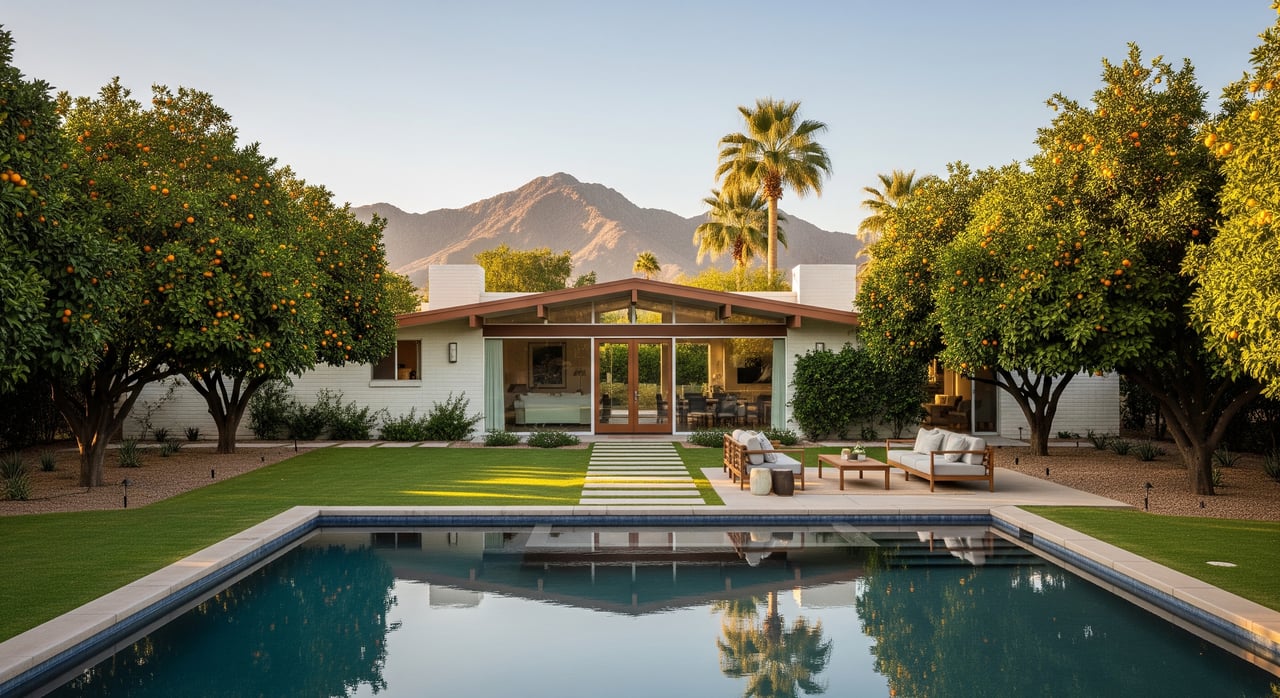
Arcadia’s housing is mostly single-family. Expect a mix of mid-century ranch homes, Spanish or mission-inspired bungalows, and newer builds that replace older footprints with larger, modern estates.
- Many original mid-century homes have been renovated inside while keeping the classic curb appeal.
- Some properties have been torn down and rebuilt to maximize lot depth and indoor-outdoor living.
- Canal-front and Camelback-adjacent homes often prioritize pools and generous outdoor spaces.
Architectural styles
You’ll commonly see low-slung ranch profiles, brick or stucco exteriors, and porches that fit the neighborhood’s scale. Newer construction leans modern or transitional, with open layouts and large glass that pulls in yard views.
Lot sizes and outdoor living
Lots are typically larger than many other in-town Phoenix neighborhoods. This supports private pools, patios, and mature landscaping. If you value yard space for pets, gardening, or gatherings, Arcadia’s lot profile is a key advantage.
Renovate or rebuild?
Many buyers compare updating an existing home with starting fresh on a deeper lot. Your choice will depend on budget, timeline, and how much change you want.
Renovation: pros and tradeoffs
- Pros: Keep mid-century charm, trim costs versus a full rebuild, and move faster if updates are light to moderate.
- Tradeoffs: Older systems may need upgrades, and existing footprints can limit expansion. You’ll want to evaluate roof, plumbing, electrical, and irrigation closely.
Rebuild: pros and tradeoffs
- Pros: Tailored floor plan, modern systems, energy efficiency, and full control of design.
- Tradeoffs: Higher cost, longer timeline, and more coordination with permitting and utilities.
Permits, design, and neighborhood fit
The City of Phoenix Planning & Development Department oversees permits and zoning. While historic overlays are limited, neighbors often care about scale and design harmony. Before you commit, factor in permitting timelines and neighborhood expectations.
Market position and competition
Arcadia is known as a higher-priced, in-town market relative to metro Phoenix. Inventory is limited and demand is strong, especially for renovated homes or premium micro-locations like canal frontage. Competitive offers are common.
- Budget for a premium compared with citywide medians.
- If you’re targeting older homes, set aside funds for upgrades or plan for phased improvements.
- For a teardown or major expansion, build in contingencies for design, permitting, and construction costs.
Schools and enrollment basics
School options vary by address. Parts of Arcadia feed into Scottsdale Unified School District and other nearby districts. Because boundaries differ by parcel, confirm attendance zones directly with the districts before you move forward on a home.
Families also have access to private, parochial, and charter options within a short drive. Many buyers choose Arcadia for the combination of outdoor space and nearby school choices, but you should verify each address individually.
Daily life, dining, and outdoor access
Arcadia offers a neighborhood-forward dining scene with cafés, bakeries, casual wine bars, and chef-driven restaurants along Camelback and nearby streets toward Scottsdale. Larger shopping centers and national retailers sit a short drive away, and weekly markets and events are common in adjacent communities.
Parks, trails, and canal path
The Arizona Canal Path runs through the area and is a favorite for walks, runs, and cycling. Camelback Mountain and the Echo Canyon trailheads are a quick drive for sunrise hikes and skyline views. Many homes include private pools, and you’ll also find local parks and community pools nearby.
Shopping and services
Daily needs are easy to cover along Camelback and adjacent corridors. You’ll find groceries, healthcare, specialty shops, and independent retailers without long drives. This convenience is part of Arcadia’s appeal.
Commute and mobility
Arcadia is primarily a driving neighborhood. Camelback Road and Indian School Road are key east–west routes, with north–south connections to central Phoenix and Scottsdale. Typical drive times to downtown Phoenix or central Scottsdale range from about 10 to 30 minutes depending on traffic and where you live in Arcadia.
Valley Metro Rail does not directly serve Arcadia’s core. Bus routes and local shuttles offer limited transit options. Many residents choose to drive for work, errands, and school runs, and use the canal path for recreation or short local trips.
Phoenix Sky Harbor International Airport is generally 15 to 30 minutes away by car, which is convenient for frequent travelers.
Buyer due diligence checklist
Use this quick list to evaluate homes and lots in Arcadia:
- Lot orientation and setbacks, including any canal-related easements.
- Mature trees, root systems, and landscape irrigation setup.
- Pool structure, equipment age, and safety features.
- Roof age and condition, plus drainage and guttering.
- Electrical, plumbing, and HVAC capacity for Arizona summers.
- Slab condition and any signs of movement or moisture.
- Boundary fences, survey markers, and any encroachments.
- Utility providers and typical seasonal energy costs.
- HOA status and any neighborhood-specific guidelines.
- Floodplain status and parcel-level data from county records.
Step-by-step path to buying in Arcadia
Follow a practical process to move with confidence:
- Align on budget and timing. Include reserves for updates or a phased improvement plan.
- Define must-haves. Lot size, pool, floor plan, and distance to work or school should lead your search.
- Pinpoint micro-locations. Weigh canal access, Camelback proximity, and traffic patterns on key arterials.
- Verify schools by parcel. Confirm district boundaries and enrollment directly with the districts.
- Inspect early and thoroughly. Bring in specialists for pools, irrigation, roofing, and HVAC.
- Model renovate vs rebuild. Get contractor input on costs, timelines, and permitting requirements.
- Prepare for competition. Pre-approval and clear terms help you move quickly when the right home hits.
Is Arcadia a fit for you?
Choose Arcadia if you want in-town living with room to spread out. You’ll trade some walkable transit options for larger lots, outdoor living, and a strong sense of neighborhood. If that balance matches your lifestyle, Arcadia can deliver long-term value and day-to-day comfort.
If you’re ready to explore homes or weigh renovation versus rebuild options, connect with a local expert who knows the micro-markets and how to compete effectively. Reach out to Mike Brooks to start a focused, low-stress search.
FAQs
Where is Arcadia in Phoenix?
- Arcadia sits east of Central Phoenix near the Scottsdale border, generally around Camelback and Indian School roads with informal boundaries that vary by source.
What home styles are common in Arcadia?
- You’ll find mid-century ranches, Spanish or mission-inspired bungalows, and newer, larger rebuilds designed for indoor-outdoor living.
How competitive is the Arcadia market today?
- Inventory is tight and prices trend above the Phoenix metro average, so renovated homes and prime lots often draw competitive offers.
Which schools serve Arcadia addresses?
- School assignments vary by parcel. Parts of Arcadia feed into Scottsdale Unified and other nearby districts, so verify each address directly with the district.
What are typical commute times from Arcadia?
- Driving to downtown Phoenix or central Scottsdale generally takes about 10 to 30 minutes depending on traffic and your exact location.
Are there HOAs in Arcadia?
- Many single-family pockets do not have HOAs, though some subdivisions and newer developments do. Confirm via title reports and seller disclosures.
What inspections should I prioritize in Arcadia?
- Focus on roof, HVAC, plumbing, electrical, pool systems, irrigation, mature trees, slab condition, and any canal easements or floodplain considerations.