If you are looking at Arcadia rental homes as a long-term investment, the biggest question is simple: are you buying cash flow, or are you buying staying power? In Arcadia, that distinction matters because this is one of Phoenix’s more expensive and established neighborhoods, where the investment story is usually about asset quality, neighborhood identity, and long-term appeal. If you want a clearer picture of what makes Arcadia work for some investors and less so for others, this guide will walk you through the tradeoffs. Let’s dive in.
Why Arcadia stands out
Arcadia has a distinct place in the Phoenix market. The neighborhood, as defined by the City of Phoenix historic survey, is generally bounded by Lafayette Boulevard, Rockridge Road, 44th Street, and Scottsdale Road. Its roots are tied to large estate lots, citrus orchards, and irrigation-supported residential development, which still shape how the area looks and feels today.
That history matters because Arcadia is not just another infill neighborhood. Phoenix planning materials describe it as an older established community with mature landscaping, varied lot sizes, and a unique residential character. For a long-term investor, that kind of identity can support durability over time, especially in a market where many areas compete mostly on price.
Arcadia pricing for investors
Arcadia sits in the premium tier of the local market. Recent Redfin data places the median sale price at $1,324,554, with homes averaging 56 days on market. Realtor.com also reports a median listing price of $1.845M, along with 105 active listings, 86 rental listings, and a median rent of $1,495 per month.
Those numbers tell you two important things. First, entry cost is high compared with much of Phoenix. Second, rental pricing does not always rise at the same pace as home values, which can make the rent-to-price ratio less attractive for investors focused on immediate yield.
Long-term hold vs cash flow
For most investors, Arcadia makes more sense as a long-term hold than as a pure cash-flow play. The area offers limited supply in a mature neighborhood, preservation-oriented planning, and a recognizable brand within Phoenix. That combination can appeal to buyers and renters who want a well-established setting rather than a more generic housing option.
If your goal is maximizing initial return, Arcadia may feel expensive. Nearby submarkets offer lower acquisition points, which can change the math quickly. But if your strategy is to hold a scarce asset in a sought-after close-in neighborhood, Arcadia deserves a closer look.
How Arcadia compares nearby
Arcadia is priced well above many nearby alternatives. Recent Redfin medians show Biltmore at about $1.07M, Scottsdale city at $954K, Old Town Scottsdale at $560K, Central Phoenix at $510K, and Phoenix overall at $464K. Arcadia’s roughly $1.32M median puts it in a much higher bracket than most close-in options.
That does not automatically make Arcadia better or worse. It simply means your investment thesis needs to be different. In Arcadia, you are usually paying for location, lot character, mature landscaping, and neighborhood identity more than for a simple spread between purchase price and rent.
What renters expect in Arcadia
Arcadia’s rental-home profile is typically detached single-family housing on larger lots. This is not a market defined mainly by dense apartment stock. The setting, yard, trees, and outdoor feel can carry real weight in how a home is perceived.
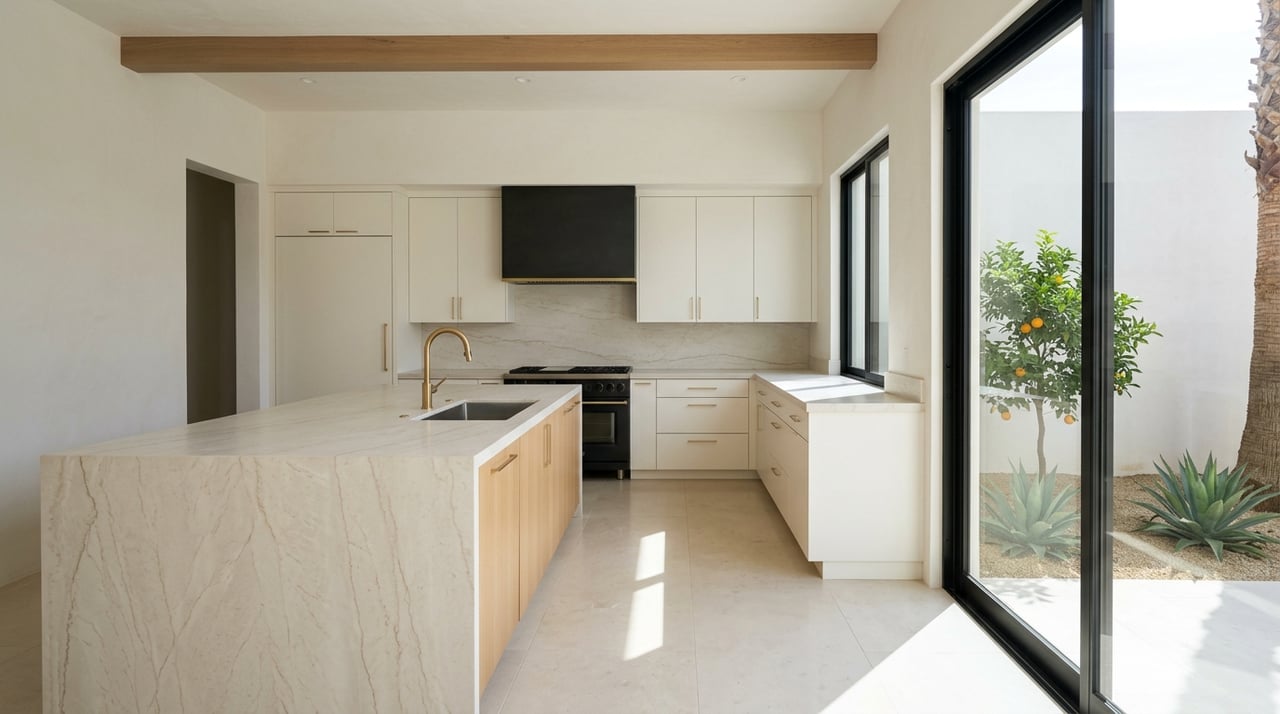
Because of that, renters in Arcadia often expect a home to feel move-in ready and well cared for. In a neighborhood with premium pricing and a strong landscape identity, basics like dependable HVAC, functional kitchens and baths, and maintained exterior spaces are especially important. If the property feels neglected, it can feel out of step with the rest of the area.
The rental market backdrop
One of the biggest mistakes investors make is assuming a high-end neighborhood automatically means strong rent growth. In the Phoenix-Mesa-Scottsdale metro, Realtor.com reported a median asking rent of $1,431 in January 2026, while the metro’s 2025 vacancy rate was 8.4%, which it categorized as renter-friendly. Zillow also noted that new rental construction in Phoenix has helped keep rent growth in check.
That softer backdrop matters in Arcadia too. Even if the neighborhood is desirable, investors still operate within a metro-wide rental environment where tenants may have more options. That makes pricing discipline, property condition, and professional leasing strategy more important.
Operating costs to plan for
Landscaping matters here
In Arcadia, landscaping is not just curb appeal. Phoenix planning documents specifically emphasize mature landscape materials, citrus-compatible planting, shade trees, and efficient water use in and around the area. That means exterior upkeep is part of the property’s value proposition.
For you as an investor, this can raise recurring costs. Yard maintenance, irrigation oversight, tree care, and seasonal cleanup may play a bigger role here than in a more basic rental submarket. If you underbudget for exterior maintenance, tenant satisfaction and resale appeal can suffer.
HVAC and systems count
Phoenix heat makes HVAC reliability a must in nearly any single-family rental, and that is especially true in a premium neighborhood. In Arcadia, tenants are likely to compare your home to other well-located, well-kept properties nearby. A dated or unreliable system can quickly become a major weakness in leasing and retention.
This does not mean every property needs luxury-level upgrades. It does mean you should underwrite with realistic repair and replacement reserves, especially if you are buying an older home.
Renovations and permit rules
If you plan to improve an Arcadia rental home, permit requirements should be part of your underwriting from day one. The City of Phoenix requires permits for new homes, remodels and additions, garage or carport conversions, porch enclosures, demolition, patio covers, and fences or walls. Investors should not assume a light rehab can move forward without city review.
Phoenix also adopted the 2024 Phoenix Building Construction Code, effective August 1, 2025. If you are budgeting renovations, it is wise to plan for current-code review instead of relying on past standards or old contractor assumptions. Early permit research can help you avoid timing and budget surprises.
Rental registration and tax details
Arcadia investors also need to stay on top of local administrative rules. Maricopa County requires residential rental properties to be registered with the Assessor under A.R.S. §33-1902. If you are an out-of-state owner, you must also designate an Arizona statutory agent.
The county classifies non-qualified-family-member rentals as legal class 4.2. Phoenix also states that starting January 1, 2025, owners of residential rentals should no longer collect city TPT on long-term lodging stays of 30 days or more. These are manageable steps, but they show why long-term ownership here is not fully hands-off.
When Arcadia makes sense
Arcadia can be a strong fit if you want to own in a neighborhood with a clear identity and limited supply. It may also make sense if you value long-term asset preservation, plan to hold through market cycles, and are comfortable with higher upfront costs and ongoing maintenance. In that case, Arcadia offers a different kind of investment appeal than lower-cost parts of Phoenix.
It may be a less natural fit if your main goal is finding the most price-efficient rental income. With lower entry points in Central Phoenix or Old Town Scottsdale, some investors may see stronger short-term math elsewhere. Arcadia is usually a market for patient owners who see value in scarcity, presentation, and long-term neighborhood durability.
Smart underwriting tips
If you are evaluating Arcadia rental homes for a long-term portfolio, keep your underwriting grounded in the neighborhood’s real operating profile.
Consider these basics:
- Budget for landscaping as an ongoing core expense, not an occasional extra
- Build in reserves for HVAC, repairs, and aging systems
- Verify permit requirements before closing if you plan to renovate
- Confirm rental registration and ownership setup with Maricopa County
- Review how your asking rent compares with other premium close-in homes, not just Phoenix-wide averages
- Be realistic about vacancy and leasing pace in a renter-friendly metro environment
The bottom line on Arcadia rentals
Arcadia rental homes can work well for long-term investors, but usually for a specific type of strategy. This is less about chasing the cheapest acquisition or the highest immediate yield, and more about owning in a scarce, established Phoenix neighborhood with lasting appeal. If you go in with clear expectations on pricing, maintenance, permitting, and tenant standards, Arcadia can be a thoughtful long-hold play.
If you want help evaluating an Arcadia rental purchase, comparing it with nearby submarkets, or setting up a leasing and management plan, Mike Brooks can help you approach the decision with local insight and a practical investment lens.
FAQs
What makes Arcadia rental homes different from other Phoenix investment properties?
- Arcadia is generally defined by larger-lot single-family homes, mature landscaping, and a long-established neighborhood identity, which can make it more of a long-term asset play than a pure cash-flow investment.
Is Arcadia a good area for long-term rental investors?
- Arcadia can be a good fit if you want neighborhood durability, limited supply, and long-term appeal, but it is usually less attractive for investors focused mainly on high initial yield.
How expensive are homes in Arcadia compared with nearby areas?
- Recent market data places Arcadia around a $1.32M median sale price, which is above Biltmore, Scottsdale city, Old Town Scottsdale, Central Phoenix, and Phoenix overall.
What kind of renters typically look for Arcadia rental homes?
- Arcadia’s rental stock is typically detached single-family housing on larger lots, and renters often expect move-in-ready condition, reliable systems, and well-maintained outdoor spaces.
What operating costs matter most for Arcadia rental properties?
- Landscaping, irrigation, tree care, HVAC upkeep, and general exterior maintenance are especially important because the property’s setting and curb appeal are a meaningful part of its value.
Do Arcadia rental property owners need permits for renovations?
- Yes. The City of Phoenix requires permits for many common projects, including remodels, additions, garage or carport conversions, patio covers, porch enclosures, demolition, and some fences or walls.
Do long-term rental owners in Arcadia need to register the property?
- Yes. Maricopa County requires residential rental properties to be registered with the Assessor, and out-of-state owners must designate an Arizona statutory agent.
Should Arcadia investors expect strong rent growth right now?
- Not necessarily. The broader Phoenix-Mesa-Scottsdale rental market has seen softer conditions, including a renter-friendly vacancy rate and moderated rent growth, so careful pricing and realistic underwriting matter.